1. HAPS occupies a sweet spot Between Earth and Space
Don't be confused by the binary of ground towers against orbiting satellites. Platform stations operating at high-altitudes work in the stratosphere. They are typically between 18 and 22, kilometres above sea level -- a layer of atmosphere in which the air is so quiet and predictable that a properly designed aircraft can hold its spot with remarkable accuracy. This altitude is large enough to provide massive geographic footprints by a single vehicle yet still close enough Earth the signal latency stays in the low range and that the hardware doesn't need to survive the brutal radiation environment that orbits space. This is an unexplored portion of sky, and the aerospace world is only now at the beginning of developing it.
2. The Stratosphere's Calmness Is Much Better Than You'd Expect
One of most contradictory facts about stratospheric flights is how stable the environment is contrasted to the turbulent troposphere below. These winds at cruising altitudes tend to be gentle and consistent, which is critical for station-keeping -- the ability of an HAPS vehicle to remain in the same position above a target area. for earth observation or telecommunications missions, drifting just several kilometres away from its position can result in poor coverage. Platforms that are designed to ensure true station keeping, such as those developed by Sceye Inc, treat this as a fundamental design requirement rather than as an afterthought.
3. HAPS Stands for High-Altitude Platform Station
The definition has merits a thorough explanation. Platform stations with high altitudes are described in the ITU (International Telecommunications Union) frameworks to be a base station on any object at an altitude of 20 to 50 kilometers within a certain, nominal station that is fixed in relation to Earth. Its "station" part is deliberate They aren't research balloons drifting across continents. They're telecommunications or observation infrastructures that are located on stations and performing ongoing missions. They are less like aircraft, more like low-altitude satellites that are reusable and have the capability of returning, being serviced or redeployed.
4. There are a variety in the types of vehicles under the HAPS Umbrella
It's not the case that all HAPS vehicles look the exact same. The category includes solar-powered fixed-wing aircraft, airships with lighter-than-air weights, and balloons tied to a tether. All have trade-offs involving payload capacity, endurance, and cost. Airships, for example, are able to carry heavier payloads over longer periods since buoyancy does majority of the lifting leaving solar energy to power the propulsion system, stationkeeping also known as the onboard. Sceye's approach uses a lighter-than-air Airship design specifically to maximize load capacity and mission duration -- an intelligent architectural choice that differentiates it from fixed-wing rivals who chase altitude records with a minimal burden.
5. Power Is the Central Engineering Challenge
To keep a structure in the high-altitudes for weeks or even months without refuelling means solving an energy equation that has tiny margin for error. Solar cells are able to capture energy during daylight hours, but platforms must be able to endure the evening without power storage. This is when battery energy density becomes essential. Innovations in lithium sulfur battery chemistry -- with energy density of 425 Wh/kg or more are making stratospheric endurance missions increasingly viable. Alongside a growing solar cell's performance, the goal is a closed, dependable power loop that generates and stores enough energy in each day so that it can continue to operate at full capacity for the duration of.
6. The Footprint Coverage Is Huge When compared to ground Infrastructure
A single high-altitude tower station at 20 km can create a terrain of several hundred kilometres in diameter. A typical mobile phone tower covers less than a couple of kilometres. This asymmetry results in HAPS the ideal solution for connecting remote or underserved regions where the construction of terrestrial infrastructure is feasible. One vehicle at the stratospheric level can do what would otherwise require hundreds or dozens, if not thousands, of ground-based assets -- making it one of the more reliable solutions for that persistent connectivity gap.
7. HAPS may carry a variety of payload Types At the Same Time
While satellites are typically locked into a defined mission at the point of launch, stratospheric platforms could transport multiple payloads at once and adjusted between deployments. One vehicle could have a telecommunications antenna for broadband delivery, as well as sensors to monitor greenhouse gases, wildfire detection, or oil pollution monitoring. The multi-mission flexibility is one many of the most convincing economic arguments for HAPS investment. The same infrastructure is able to support connectivity and climate monitoring at the same time, instead of having separate assets dedicated for each task.
8. This Technology permits Direct-toCell, as well as 5G Backhaul Applications
From a communications perspective one of the things that does make HAPS special is its compatibility with existing devices ecosystems. Direct-to-cell approaches allow standard smartphones access to the internet without any special hardware, while the platform acts as a"HIBS" (High-Altitude IMT Base Station) (which is really a cell tower that can be seen in the sky. It also functions as a 5G backhaul, connecting earth infrastructure to other networks. Beamforming technology permits users to control the signals precisely to the locations where there is demand rather than broadcasting randomly which increases the efficiency of the spectral.
9. The Stratosphere is now attracting serious Investment
A niche research sector a decade ago is now attracted substantial capital from major telecoms companies. SoftBank's alliance with Sceye on a planned nationwide HAPS infrastructure in Japan which is aimed at commercial services in 2026, represents one of the largest commercial commitments to connectivity in the stratosphere to this point. This signals a shift from HAPS being viewed as experimental becoming a deployable infrastructure that generates revenue -- an affirmation that's important to the broader industry.
10. Sceye Represents a New Concept for a Non-Terrestrial Infrastructure
Incorporated by Mikkel Vestergaard with headquarters in New Mexico, Sceye has made itself known as a significant long-term participant in what is truly frontier-level aerospace. Sceye's focus on combining endurance, payload capabilities, and multi-mission capabilities is indicative of the firm belief that these platforms could become a long-lasting layer of global infrastructure which is not a novelty or gap-filler that is merely a third tier in between the terrestrial network as well as orbital satellites. For connectivity, weather observation, and disaster management, high-altitude platforms are beginning to look less like a fascinating concept and more like a natural element of how humanity monitors and interacts with the planet. See the top rated what's the haps for more tips including Mikkel Vestergaard, softbank haps, space- high altitude balloon stratospheric balloon haps, sceye haps airship specifications payload endurance, sceye earth observation, Wildfire detection technology, sceye haps status 2025, softbank sceye partnership, Stratospheric telecom antenna, Stratospheric infrastructure and more.
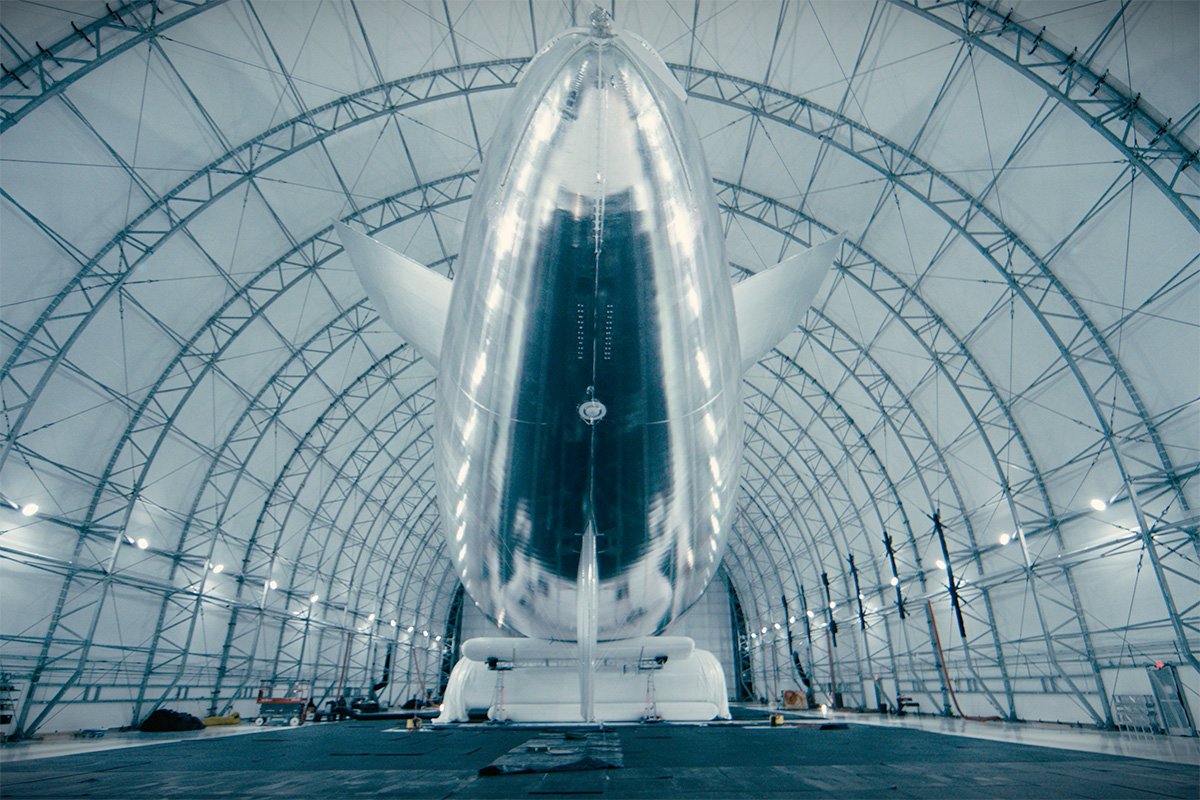
Sceye's Solar-Powered Airships Are Bringing 5g Service To Remote Regions
1. The Connectivity Gap Can Be a Infrastructure Economics issue first.
Roughly 2.6 billion people lack significant internet access. there is rarely it's due to a lack or technology. It's a lack of financial justification to install that technology in regions where population density is low, terrain is too difficult or political stability cannot be trusted to guarantee an appropriate return on infrastructure investments. Installing mobile towers across mountainous archipelagos, desert interior regions, or sparsely populated island chains is expensive when compared with revenue projections which don't back it. This is why the gap in connectivity has remained regardless of years of effort and genuine goodwill -- the issue isn't a lack of awareness or intent but the economics of terrestrial rollout in places that do not fit into the standard infrastructure plan of action.
2. Solar-Powered Airships Change the Way We Deploy Economics
A stratospheric plane that serves as an antenna for cell phones in the sky alters the nature of the cost for connectivity to remote sites in a way that is significant at a practical level. A single tower at 20 km altitude has the ground and would require dozens of terrestrial towers to replicate sans the infrastructure for civil engineering and land acquisition infrastructure and ongoing maintenance that ground-based deployment demands. The solar-powered platform removes the fuel logistics from the equation completely. The platform generates its own electricity through sunlight, accumulates it into high-density lithium batteries that can be used for the duration of the night, and can continue its work without supply chains reaching into remote areas. If the barrier to connectivity lies in the expense and complexity of the physical infrastructure it is a completely different idea.
3. The 5G Compatibility Problem is More Important Than It Sounds
Broadband that is delivered from the upper atmosphere is only economically viable as long as it is connected to the devices users actually own. Satellite internet networks of the past required high-end terminals, which were expensive heavy, bulky, and unsuitable for widespread use. The evolution of HIBS technology which is based on High-Altitude International Mobile Base Station standards has changed this by making stratospheric satellites compatible with same 4G and 5G protocols which smartphones of today use. A Sceye airship serving as a telecommunications antenna can, in principle serve ordinary mobile devices without needing any additional hardware on the user's end. The compatibility with existing mobile device ecosystems is what makes the difference between a solution for connectivity which is available to all in a geographical area of coverage and one which is only available to those who spend the money for specialized equipment.
4. Beamforming transforms a large footprint into a highly targeted and efficient coverage
The area of coverage that is raw for a stratospheric structure is vast but the raw coverage and functional capacity differ. Broadcasting the signal in a uniform manner throughout a 300-kilometre wide footprint can waste a lot of spectrum to uninhabited terrains open water, and in areas which have no active users. Beamforming technology enables the stratospheric radio antenna to focus signal energy dynamically towards the places where demand is actually presentsuch as a fishing village on one side of the coast and an agricultural area in another, or a community suffering from a catastrophe in a third. This clever signal management enhances spectral efficiency. This translates directly into the capacity offered to users than the theoretical maximum area the system could illuminate in the event of broadcasting indiscriminately.
5G backhaul applications profit from the same principle -direct high-capacity links to ground infrastructure nodes that require them instead of spreading capacity over empty areas.
5. Sceye's Airship design maximizes the payload that is offered for Telecoms Hardware
The telecoms hardware on the stratospheric platform antenna arrays and signal processing equipment, beamforming equipment and power management systemsare of real weight and volume. A vehicle that expends the majority of its structural and energy budget simply flying around has little left over for worthwhile telecoms equipment. Sceye's lighter than air design addresses this issue directly. Buoyancy carries the vehicle without an ongoing energy cost for lifting. That means the available capability and power supply can accommodate a telecoms load large enough to deliver commercially useful capacity, rather than just a token signal that spans a vast space. Airships' design isn't fundamental to the connectivity mission -that's the reason why carrying a serious telecoms payload together with other mission equipment viable.
6. The Diurnal cycle determines if the Service is Continuous or Intermittent.
A connectivity solution that operates through daylight hours but is dark at night is not an actual connectivity service- it's simply a demonstration. For Sceye's solar-powered airships to provide the type of continuous security that communities in remote areas, disaster response personnel, and commercial operators depend on, it must deal with the overnight energy issue efficiently and repeatedly. The diurnal energy cycle -- producing sufficient solar power during daylight to power the entire system and to charge batteries sufficiently to be fully operational until next dawn -- is the governing engineering restriction. The advancements in lithium sulfur battery energy density, with a value of 425 Wh/kg and increasing solar cell efficiency on aerospheric planes are the factors that close this loop. Without these longevity and consistency, they're mostly theoretical, rather than actually operating.
7. Remote Connectivity is Adding Social and Economic Effects
The case for connecting remote regions isn't solely humanitarian in the sense of abstract. Connectivity allows telemedicine, which reduces the cost of healthcare delivery in areas without hospitals nearby. It allows for distance education which doesn't require the building of schools in each community. It allows financial services access that can replace cash-dependent economies by the efficiency through digital commerce. It allows early warning systems of severe natural hazards to touch people who are most susceptible to their effects. Each of these effects will intensify in the course of time as communities grow digital literacy and local economies are able to adapt to reliable connectivity. The stratospheric internet rollout beginning in remote regions isn't delivering a luxury as it is providing infrastructure that will have downstream effects on health, education, safety along with economic participation.
8. Japan's HAPS Network demonstrates what a National-Scale Operation Looks Like
This SoftBank agreement with Sceye targeted at the pre-commercialization of HAPS Services in Japan 2026 is noteworthy partly because of its scale. A nationwide network implies multiple platforms that provide overlapping and continuous coverage across a nation whose geography -- thousands of islands, mountainous interior, and long coastlinesand creates precisely the kind of coverage challenges that stratospheric connectivity has been designed to address. Japan also provides a sophisticated regulatory and technical environment where the operational challenges of managing stratospheric platform management at a nationwide scale will be faced and solved in a manner that will provide lessons to every subsequent deployment elsewhere. What's working in Japan will determine what's working over Indonesia and it's the Philippines, Canada, and any other country with similar size and coverage.
9. The Founder's Perspective Determines How the Connectivity Mission Is Then Framed
Mikkel Vestergaard's guiding principle at Sceye treats connectivity not as commercial product which happens in remote areas but as an infrastructure with a social obligation that is attached to it. This framing determines the types of deployments the company will prioritize and the partnerships it pursues, and how it articulates the mission of its platforms before regulators, investors and potential operators. The emphasis placed on remote areas and communities that aren't served, as well as disaster-resilient connectivity reflects a view that the layer constructed should benefit the communities that are not served by existing infrastructure. This is not a purely charitable idea, instead, it is a basic requirement of design. Sustainable aerospace innovation, as per Sceye's terminology, means creating things that address real gaps instead of improving the service offered to communities already well served.
10. The Stratospheric Connectivity Layer is Starting to Look Like an Inevitable
For years, HAPS connectivity existed primarily as a concept that periodically attracted funding and created demonstration flights, without generating commercial services. The fusion of developing battery chemistry, improved solar cell efficiency, HIBS standardisation enabling device compatibility, and committed commercial partnerships has shifted the direction of this technology. Sceye's solar-powered airships are a convergence of these enabling technologies in a time when the demand side of things - remote connectivity, disaster resilience, 5G's extension has never been more clearly defined. The stratospheric layer that connects space satellites and terrestrial networks is not advancing slowly along the perimeters. It's beginning to be constructed in a deliberate manner, with specific coverage targets, specific technical specifications, and specific commercial timelines linked to it. Check out the most popular japan nation-wide network of softbank corp for blog recommendations including softbank group satellite communication investments, sceye services, sceye haps airship status 2025 2026 softbank, telecom antena, Solar-powered HAPS, Monitor Oil Pollution, sceye haps airship specifications payload endurance, Sceye stratosphere, HAPS technology leader, Solar-powered HAPS and more.
